HACCP Certification or a HACCP Plan:
Which One Do You Actually Need?
Four different things get called "HACCP certification". Here is how to tell which one you were asked for, what each costs in 2026, and how to get the answer in writing before you pay.
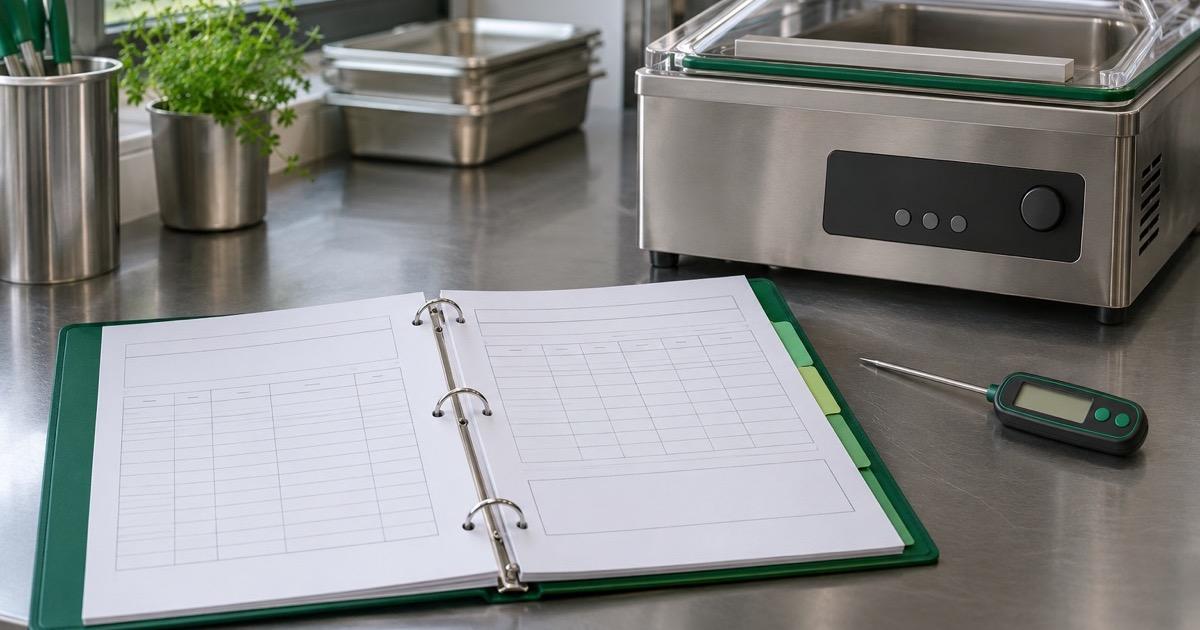
Somebody told you that you need HACCP certification. Maybe an inspector during a permit application, maybe a distributor who wants to stock your product, maybe the organizer of a market you want to trade at.
Before you pay anyone, find out what you are being asked to prove. The phrase covers four different things, and buying the wrong one is common: people complete a $275 to $525 training course and still do not have the document that was requested. Every figure and rule below was checked in November 2026 and links to the source.
Quick Answer
A HACCP certificate says a person passed a course. A HACCP plan describes the hazards and controls in your own products and process. They are not substitutes for each other, and most small food businesses need the plan rather than the certificate. Work out which of these four you were asked for before you spend anything.
| What people mean | What it actually is | Who issues it |
|---|---|---|
| Training certificate | One named person completed a course | The training provider |
| Written HACCP plan | Hazards and controls for your products and process | Your business |
| Regulatory approval | The authority has accepted a specific process | Your health department |
| Business certification | An audit of your site against a named standard | A certification body |
📋 Free: HACCP Requirement Decision Pack
A 2-page PDF that settles this for your business. Page 1 works out which of the four you need. Page 2 is a fill-in request you send to whoever asked, plus a box to record their answer — so you buy against something in writing, not a guess.
Free, no payment details. We email the PDF once. Unsubscribe anytime. See our privacy policy.
The four things people call "HACCP certification"
HACCP stands for Hazard Analysis and Critical Control Point. It is a method for finding and controlling food safety hazards, not a product you buy. When someone demands "certification", they mean one of these:
| What it is | What it proves | What to ask for |
|---|---|---|
| Training certificate | A named individual completed a particular course | The accepted course, the curriculum, whose name is on it, any refresher rule |
| Written HACCP plan | Your hazards and controls, for your products and process | Required contents, supporting records, whether anyone reviews it |
| Regulatory approval | The authority has accepted a specific process | The rule, the form, the fee, whether you must wait for written approval |
| Business certification | A third-party audit against a named standard | The exact standard, accepted bodies, site and product scope, audit cycle |
There is often a fifth thing
A local food handler card or food protection certificate is separate again, and a general HACCP course usually will not satisfy it. New York City is explicit: Health Code §81.15 requires a certificate issued by the Department after a course in food protection and an examination administered by the Department. No private provider's HACCP certificate replaces that one.
Remember the difference this way: a certificate records learning, a plan describes controls, approval authorizes a process, and certification audits a site.
Do restaurants and food trucks legally need HACCP certification?
There is no national yes-or-no answer based on what kind of business you run. A truck cooking burgers to order and a kitchen vacuum-packing chilled meals are doing different things, and the rules follow the process, not the signage.
Start with the authority that issues your permit. The FDA Food Code is a model that states and localities adapt; a new edition being published does not change what your city requires today. Our guide to whether you need a HACCP plan goes through this in more detail.
Washington state shows how the rule tends to be written. WAC 246-215-08210 requires a HACCP plan to be submitted for approval when any of three things is true:
- submission of a HACCP plan is required according to law;
- a variance is required under the listed sections of the chapter; or
- the regulatory authority determines that a food preparation or processing method requires a variance.
Notice what the trigger is: an activity, not a category of business. These are the processes that most often require a plan, a variance or prior approval:
- Reduced oxygen packaging, vacuum sealing and sous vide or cook-chill
- Curing or fermenting; smoking for preservation rather than same-day flavor
- Acidification to extend shelf life, such as vinegar in sushi rice
- Sprouting seeds or beans; custom processing of juice
- Holding food using time alone, without temperature control
If none of those describe you, your inspector is far more likely to want written procedures and daily temperature logs than a seven-principle plan. If one of them does, expect a written plan, and in some places approval before you start selling. A variance request is a separate document again.
A worked example: one kitchen, two different requirements
Take a New York City restaurant that wants to start sous vide cooking. Two separate provisions of the same Health Code article apply, and neither one covers the other.
| Provision | What it requires | What satisfies it |
|---|---|---|
| §81.12 Reduced oxygen packaging; cook chill and sous vide | The establishment "shall not utilize ROP processes without obtaining prior Department approval of a Hazard Analysis and Critical Control Point (HACCP) plan". The food must have at least two controls in place, such as time, temperature, Aw or pH, to prevent growth of C. botulinum or Listeria monocytogenes. | A written plan for this process, approved by DOHMH before you start |
| §81.15 Food protection course | Nobody charged with managing or supervising the operation may work in that role without a certificate issued by the Department after completing a food protection course and passing a Department examination. The holder must be on the premises supervising food preparation. | A Department-issued food protection certificate held by a named supervisor |
One restaurant, two requirements, and no amount of online HACCP training satisfies either of them. The plan has to be written about that kitchen and approved; the certificate has to be earned by sitting the city's own exam.
This is a New York City example, not a national rule
Other jurisdictions handle the same process differently, and some require no prior approval at all. The point is the shape of the problem, not these section numbers. Ask your own authority about the exact packaging, cooking, cooling, storage and service steps you intend to use.
What a written HACCP plan actually contains
A plan explains how your operation controls its own hazards. The FDA's HACCP principles and application guidelines set out seven elements:
- Conduct a hazard analysis.
- Determine the critical control points.
- Establish critical limits.
- Establish monitoring procedures.
- Establish corrective actions.
- Establish verification procedures.
- Establish record-keeping and documentation.
Around those sit the product description, intended use, process flow and who is responsible for what. FDA also treats staff training and supporting programs as part of implementing the system rather than optional extras. Our guide to the seven principles works through each one, and HACCP plan requirements covers what reviewers look for.
A certificate cannot describe your kitchen. Whatever a course teaches, the plan still has to state your products, your process flow, your critical limits, who checks them and what happens when one is missed. That part is written about your operation or it is not worth submitting.
Need the plan rather than the certificate?
AuditBinder turns your answers into an inspection-ready binder: hazard analysis, CCP summaries, monitoring logs and SOPs. Look at a filled-in example before you decide.
How much does HACCP certification cost in 2026?
The phrase is too broad for a single price, because a course fee, a document-preparation fee and a facility audit pay for three different kinds of work. Here are three published course prices, read from the providers' own pages on 15 November 2026. They are examples, not a market average and not a ranking of quality.
| Provider | Published price | Format and length | Credential named |
|---|---|---|---|
| NC State | $275 | On demand, about 14 to 16 hours | International HACCP Alliance certificate of completion at 80% or above |
| Registrar Corp | $499 | Self-paced online, 12 to 14 hours | Official HACCP Alliance certificate |
| SCS Global Services | $525 self-paced $800 instructor-led | Self-paced online, or a 16-hour live course | International HACCP Alliance approved course |
Two things to notice. The spread between the cheapest and the dearest is nearly three times for courses that all name the same Alliance credential, so the price is not telling you much about acceptance. And sector matters: NC State sends anyone who needs Seafood HACCP to a different course entirely.
What the documentation costs
AuditBinder's published pricing is one-time, with no subscription: Starter $47 for a single binder with PDF export, Pro $67 for up to three binders with editable DOCX export, and Advanced $97 for up to twenty with an audit preparation checklist.
That is documentation software. It does not buy you a training qualification, a certification audit or regulatory approval. Where your process needs specialist review, validation studies, laboratory testing or an application fee, those are separate costs. If you want to compare paying a person instead, see our consultant fee guide and the broader HACCP plan cost guide.
Do not add the numbers up before you know what you need
A course plus a documentation tool is a smaller number than most consultant quotes, but arithmetic is not a compliance budget. Until you know which of the four things was actually asked for, any total is a guess. That is what the decision pack above is for.
What business certification costs
Ask the buyer for the exact requirement before requesting an audit quote. SGS, as one example of a certification body, covers several standards including HACCP, SQF, BRCGS and FSSC 22000. Those names are not interchangeable, and a course price tells you nothing about what auditing your site will cost. Ask for a written scope that separates the initial assessment, any follow-up visit, and the ongoing audit cycle.
Who issues the certificate, writes the plan, and approves it
Training. The course provider. The credential belongs to the person who completed it, not to the business.
Plan preparation. Your business, with qualified help where the process needs it. Software can assemble and format the documentation; it cannot supply technical knowledge you do not have about your own process.
Regulatory approval. Follow your regulator's process where approval is required — and do not assume one exists. For seafood, FDA states that it will not formally approve HACCP plans, domestic or foreign, and that plans are neither submitted to nor preapproved by FDA. New York City, as shown above, does require prior approval for reduced oxygen packaging. Both statements are true at once, because they are different authorities regulating different things.
Business certification. The certification body, against the agreed standard and scope. Confirm your buyer accepts that specific certification before you pay for it.
When you need both training and a plan
They can be required together, but the training has to fit the work. For juice processors covered by that rule, FDA explains that the people developing, verifying and modifying the plan need appropriate qualifications through training or experience; a generic course name does not establish that fit.
Do not apply retail guidance to a manufacturer either. Facilities covered by the FSMA preventive controls rule have obligations under a different framework: a written food safety plan prepared, or its preparation overseen, by a preventive controls qualified individual. Exemptions and modified requirements exist, and a general HACCP binder should not be assumed to satisfy it.
The most useful sentence FDA has written on this subject: on PCQI status, the agency says the rule does not require any specific certifications, and that it will assess the adequacy of a facility's food safety plan rather than an individual's documented qualifications. The plan is the thing being judged.
Copy and send: "what exactly do I need?"
When an inspector, landlord, event organizer, distributor or customer asks for "HACCP certification", send this back before you buy anything:
We operate a [business type] in [city and state] and prepare [products] using [brief process description].
When you ask for HACCP certification, do you mean:
— a named individual's training certificate?
— a written HACCP plan for our products and processes?
— regulatory review, a variance or approval before we start?
— third-party certification of our business to a particular standard?Please send the rule or supplier requirement that applies, the accepted course or standard, the documents you need from us, any fees, and the review steps. Please also confirm whether we must wait for written approval before starting this process.
Attach a real process description. "Meal prep" tells a reviewer nothing; "cook, vacuum seal, chill, refrigerate and deliver within four days" gives them something to answer. Then write the answer down — the free decision pack above has a box for exactly that, because the person who told you on the phone will not remember in March.
Sources
- HACCP Principles & Application Guidelines — U.S. Food and Drug Administration
- FDA Food Code (model, adopted locally) — U.S. Food and Drug Administration
- Health Code Article 81, §§81.12 and 81.15 — NYC Department of Health and Mental Hygiene (PDF)
- WAC 246-215-08210, when a HACCP plan is required — Washington State Legislature
- Questions and Answers: HACCP Regulation for Fish and Fishery Products, Section IV — U.S. Food and Drug Administration
- FSMA Frequently Asked Questions, PC.5 to PC.7 — U.S. Food and Drug Administration
- Certificate expiration and auditor retraining — International HACCP Alliance FAQ
- Course prices read 15 November 2026 — NC State, Registrar Corp, SCS Global Services
On This Page
You need the plan, not a certificate
Build the written HACCP plan and the logs that go with it. One-time purchase from $47, no subscription.
See the one-time plansFrequently Asked Questions
The bottom line
An inspector or permit form asked → it is a plan or an approval. Ask which rule applies to your process.
A buyer or distributor asked → it is business certification. Get the standard's name in writing.
A landlord or market asked → usually a food handler card or your permit. Ask them to point at the document.
Nobody asked and you read it online → check before you spend. Most retail food businesses are not required to hold a HACCP certificate.
Get the requirement in writing, then buy the one thing that answers it.
Reminder: this is general information, not legal advice. Rules differ by jurisdiction, prices change, and your regulator has the final say on whether a plan is accepted. See our full disclaimer.
Build the plan they actually asked for
AuditBinder produces the written HACCP plan and the records that go with it — hazard analysis, CCP summaries, monitoring and corrective-action logs, and SOPs. One-time purchase, instant download, no subscription. It is documentation software, not training or certification.
See the one-time plans